Affiliate Disclosure: We may earn a commission when you buy through links on this site — it never changes what a pick costs you.

How we are funded

Portable Saunas, Explained Straight

Best portable saunas — and the temperatures they actually reach

Most “best portable sauna” lists quietly mix in 250-pound wooden cabins, copy the hottest number from an advert, and skip the downsides. This one does the opposite. Every pick below is genuinely portable — it folds, rolls, packs into bags, or sets up in a yard and comes back down again — and every temperature is the real operating range for its format, not the marketing version. Steam is wonderful and humid, and it tops out around 110–140°F. Infrared warms you directly while the air stays cooler. A sauna blanket warms the surface it touches, which is not the same thing as heating a room full of air. And exactly one portable format on this page reaches true Finnish sauna heat: a wood-fired tent, at 180–220°F.

If you start with that one honest fact — what kind of heat do you actually want? — the rest of the decision gets much simpler. A daily indoor ritual after work points to infrared or steam. A Saturday ritual in the yard, with real fire and real heat, points somewhere else entirely. The cheapest way to find out whether you even enjoy heat sessions points to a blanket or a budget tent. This page walks through all of it, pick by pick, with prices checked in November 2026 and the watch-outs printed in the same size type as the selling points.

See the picks The honest temperature guide

Research-based, not hands-on: we assess published specifications, manufacturer documentation and owner reports — we do not test units in-house. Prices change; the seller's page wins.

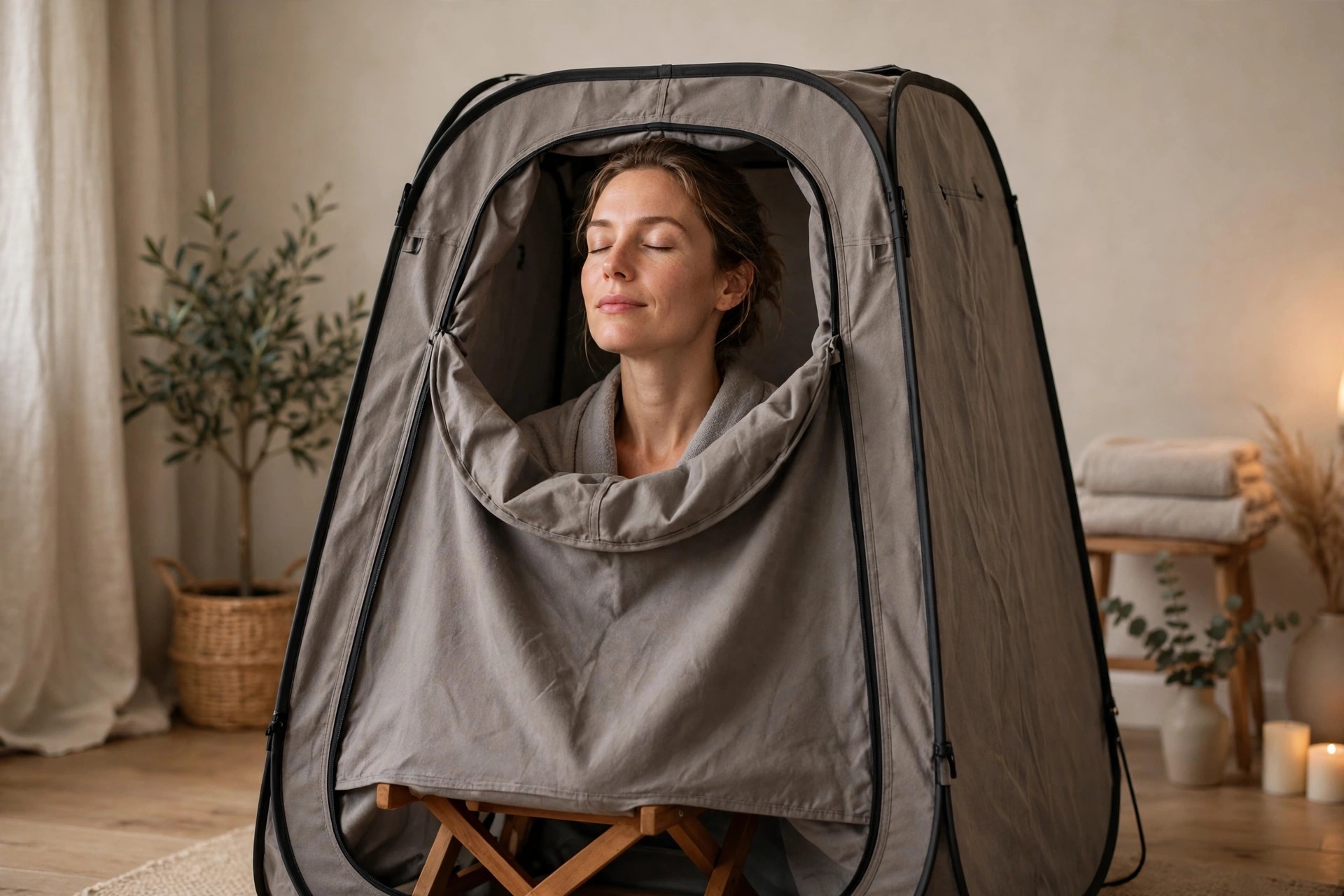
A portable steam sauna tent glowing warmly in a cedar-toned home interior, with soft steam rising from its doorway
A portable steam tent at home: hot, humid air at 110–140°F — a different kind of heat from a Finnish sauna, and a good one on its own terms. Editorial illustration.
110–140°FWhat steam tents really reach, at 100% humidity
180–220°FOnly wood-fired gets Finnish-hot — one pick on this page
4 formatsSteam, infrared, wood-fired, and blanket — four different kinds of heat
$110–$2,999The real price ladder, from a budget tent to a premium dome

Start Here

Only genuinely portable — and why that matters

Search for “best portable sauna” and you will quickly meet products that are not portable in any honest sense of the word. The clearest example is the wooden cabin: a flat-packed, two-person infrared cabin that arrives on a pallet, takes two adults and an afternoon to assemble, and ends up weighing around 250 pounds. It may be a perfectly pleasant product. It is not portable. You cannot fold it into a closet when guests visit, carry it to a rental, take it to a cabin for the weekend, or move house without planning the move around it. Yet cabin roundups dominate the search results, because “portable” has become a loose label for “smaller than a spa build” rather than a promise about how the thing actually lives in your home.

So this site draws the line where the word actually means something. To appear on this page, a sauna has to meet a simple test: one person, or at most two, can set it up without tools or construction, use it, and then put it away — in a closet, under a bed, in a garage corner, or in the bags it arrived in. Steam tents pass: a fabric enclosure, a separate steamer you fill with water, and a folding chair. Head-out infrared tents pass: fabric panels around a chair, your head outside the heat, everything folding flat. Sauna blankets pass most easily of all: you unroll one on a bed or sofa, lie down inside it, and roll it up again afterwards. And the wood-fired tent passes in the outdoor sense: it is a tent, with a stove, stones and a bench, designed to go up in a yard or at a campsite and pack back into bags when the fire is out.

That definition does more than tidy up a list. It changes what you should expect from the heat. A permanent cabin can hold a larger heater, thicker insulation and a bigger air volume, and it behaves like a small room. A portable has to make its heat inside a fabric enclosure, from a standard household outlet in most cases, and that physics sets the real temperature ranges in the table below. None of that makes portables a compromise to apologise for. For renters, apartment dwellers, people short on floor space, and anyone who wants to try a heat routine before committing to furniture, portable is precisely the point. The mistake is not buying a portable. The mistake is buying one while expecting the numbers of something else — which is why this page leads with temperatures, and why every pick carries a “watch out for” line as well as a “best for” line.

One more piece of housekeeping before the picks. You will not find miracle language here. Brands in this category advertise all sorts of outcomes, and we do not repeat claims the evidence does not support — we don't repeat detox claims, for example, because the evidence doesn't support them. What a sauna session honestly offers, on the published evidence and on owner reports, is warmth, comfort, relaxation and a ritual many people find easy to keep: twenty quiet minutes, a shower afterwards, and an evening that feels deliberately slowed down. That is a good enough reason to buy one, and it is the only reason we will sell you on.

How to read this page: This is a research-based assessment. We do not test units in-house; we work from published specifications, manufacturer documentation, regulatory filings and owner reports, and we say so wherever a number comes from the brand itself. Prices checked November 2026 — they change, and the seller's page wins.

The Shortlist

The main picks, side by side

Six picks, four formats, one table. Read the “Real max temp” column carefully: for infrared, the figure is the panel or air range the maker publishes for that model; for blankets, the honest figure is surface heat inside the wrap, not an air temperature at all — and the table says so rather than pretending otherwise.

PickFormatReal max tempPrice (Nov 2026)Best forWatch out for
SweatTentWood-fired tent180–220°F$1,499 complete kitAnyone who wants true Finnish sauna heat, outdoorsOutdoors only; you build and tend a real fire; needs yard space and dry storage for the kit
TheraSage Thera360 PlusInfrared tent, head-out100–170°F$1,428The strongest indoor infrared routine; folds flatIncluded chair has a 180 lb limit — a real caveat many roundups skip; premium price
Relax SaunaInfrared tent, head-outFar-infrared panel heat*From $1,700; Black Pro ~$2,300Buyers who want the practitioner-channel favourite and will pay for itThe highest prices on this page; panel heat is not hot-air heat, so set expectations by format
SaunaBox SmartSteam ProSteam tent130–140°F$299 ($349 list); Pro + Red Light $399A complete, affordable steam setup with a big 3.6L steamerSteam tents must be dried out after use or mould can follow; 1-year warranty is short
SereneLife portable infraredInfrared tent, head-outBudget infrared panel range*~$110–$203 by retailerA first, low-cost taste of an infrared routineBudget build and fittings; published settings and prices vary a lot by retailer listing
LifePro RejuvaWrapSauna blanketSurface heat inside the wrap — not air temp$272.99–$299.99The smallest footprint of all: a bed, a sofa, a drawer afterwardsBudget blankets in this class draw durability, zipper and controller complaints — check the warranty terms

*For head-out infrared tents, makers publish panel settings and in-tent ranges that vary by model — Durasage, for example, publishes panel settings of 104–140°F, and the HeatWave Rejuvinator publishes up to 150°F. The honest comparison is how the heat is delivered — radiant warmth on the body — not a single air-temperature number. See how portable saunas work for the full explanation, and the portable infrared sauna guide for the model-by-model ladder.

The Picks in Detail

Two top picks, because “best” depends on the heat you want

There is no single winner here, and any site that crowns one without asking where you will use it is selling, not guiding. If your idea of a sauna is the Finnish original — very hot air, a bench, water on stones, a cold step outside afterwards — only one portable delivers it, and it is our top pick for heat. If your idea is a daily indoor routine in a spare corner, folding flat when family visits, the best infrared tent is a different product entirely, and it is our top pick for indoors. Both are below, with their downsides attached.

Top pick — hottest real sauna

180–220°F · Wood-fired

SweatTent

Format: wood-fired sauna tent, outdoors · Real temp: 180–220°F · Price: $1,499 complete kit (tent, stove, stones, bench) · Power: none — no electricity

The SweatTent is the heat purist's answer, and the only product on this page we can describe, without any asterisk, as a real sauna in the Finnish sense. A wood-burning stove sits inside an insulated tent, stones heat on top of it, and the air temperature climbs into the 180–220°F range that no plug-in portable reaches. That gap is not a small one. It is the difference between “pleasantly hot” and the full, enveloping heat that sauna traditionalists mean when they use the word — the kind where ladling water onto the stones sends a wave of steam through the tent and the session organises itself around the fire you lit.

It is also, genuinely, portable in the way this site defines it. The kit — tent, stove, stones and bench — is designed to set up outdoors and pack away again, so it suits a yard, a rural property, a campsite rhythm, or a home where an indoor unit was never going to happen. There is no outlet involved, no installation, and nothing permanent left standing when you are done. Our full Sweat Tent review covers the setup and fire-tending routine in detail.

The trade-offs are just as real, and they are the reason this is not everyone's pick. It is outdoors only: weather, neighbours, local fire rules and your own willingness to build and tend a fire are all part of the product. Sessions take planning in a way that plugging in a tent does not. And at $1,499 it costs as much as the premium infrared options below — you are paying for heat and simplicity of concept, not for electronics. If those trade-offs sound like the ritual itself rather than obstacles to it, this is the one to buy.

What we like

  • The only portable format that reaches true Finnish temperatures: 180–220°F
  • Complete kit at one price — tent, stove, stones and bench included
  • No electricity, no installation, nothing permanent left in the yard
  • Packs away after use; works anywhere outdoors you can have a fire

Watch out for

  • Outdoors only — not an apartment or spare-room option
  • You build and tend a real fire every session; heat takes time to build
  • Check local fire rules and give the stove proper clearance, every time
  • $1,499 is premium money, even though the concept is simple

Check price at SweatTent Read the full review

Top pick — best infrared

100–170°F · Infrared

TheraSage Thera360 Plus

Format: portable infrared tent, head-out · Real temp: 100–170°F · Price: $1,428 · Warranty: 2 years

The Thera360 Plus is the reviewers' best-portable pick in the infrared category, and on the published evidence it earns the spot. It is a full-spectrum infrared tent — near, mid and far infrared panels, plus red-light panels — with a published temperature range of 100–170°F, the widest and hottest published range among the head-out infrared tents we assessed. It folds flat for storage, which is the detail that makes a premium indoor sauna workable in a normal home: the routine lives in a corner, the hardware disappears into a closet. The 2-year warranty is also the strongest on this page among the plug-in picks, and at this price that matters.

Infrared heat needs one honest sentence of framing, because it feels different from hot air. The panels warm your body directly, so a session can feel deeply warm while the air inside the tent stays well below Finnish sauna temperatures. Owners who love this format tend to love exactly that: an intense, focused warmth with your head out in cool room air, which many people find easier to stay in for a full session. Owners who expected a miniature Finnish sauna are the ones who end up disappointed — not because the product failed, but because the format was mis-sold to them. Our Thera360 Plus review goes deeper, and the infrared guide compares the whole ladder.

Now the caveat that too many roundups skip, printed here at full size: the included chair carries a 180 lb limit. For a $1,428 product aimed at adults, that is a genuine restriction, and if it rules the included chair out for you, you will need to factor in an alternative seat that fits the tent and the limit question becomes part of the purchase decision, not a footnote after it. Add the premium price, and the Thera360 Plus is best understood as the serious end of indoor portable infrared: the pick for someone who has decided this routine is theirs, not the pick for someone still finding out.

What we like

  • Full-spectrum infrared (near, mid and far) plus red-light panels
  • Published 100–170°F range — the strongest in its format
  • Folds flat; a premium routine that does not become furniture
  • 2-year warranty, the best among our plug-in picks

Watch out for

  • Included chair limit is 180 lb — check it against your household before buying
  • $1,428 is a committed purchase, not a trial
  • Radiant heat feels different from hot air; it is not a Finnish sauna substitute
  • Head-out design means your head stays cool — a plus for many, a minus for some

Check price at TheraSage Read the full review

Premium infrared alternative

Far-infrared · Head-out tent

Relax Sauna

Format: portable infrared tent, head-out · Heat: semiconductor far-infrared emitters · Price: from $1,700; Black Pro ~$2,300

The Relax Sauna is the practitioner-channel favourite: the portable infrared unit you will hear about from clinics and long-time infrared devotees rather than from marketplace bestseller lists. Its distinguishing feature is its heating technology — semiconductor far-infrared emitters, rather than the carbon panels used by most tents in this category — and a loyal owner base that has kept it at the premium end of the market for years. Prices start from $1,700, with the Black Pro version at around $2,300, which makes it the most expensive tent on this page.

Who should pay that? A buyer who has already decided on far-infrared as their format, has compared the emitter technology, and values the brand's long track record in that niche. Who should not: anyone still deciding between formats, because the same money buys the wood-fired SweatTent and a completely different kind of heat, and anyone expecting hot-air temperatures, because — as with every infrared tent — the warmth is radiant and direct rather than a room full of very hot air. Read our Relax Sauna review before spending at this level.

Check price at Relax Saunas Read the full review

Best steam value

130–140°F · Steam

SaunaBox SmartSteam Pro

Format: steam tent · Real temp: 130–140°F · Price: $299 ($349 list); Pro + Red Light $399 ($500 list) · Steamer: 3.6L · Setup: ~10 minutes · Warranty: 1 year

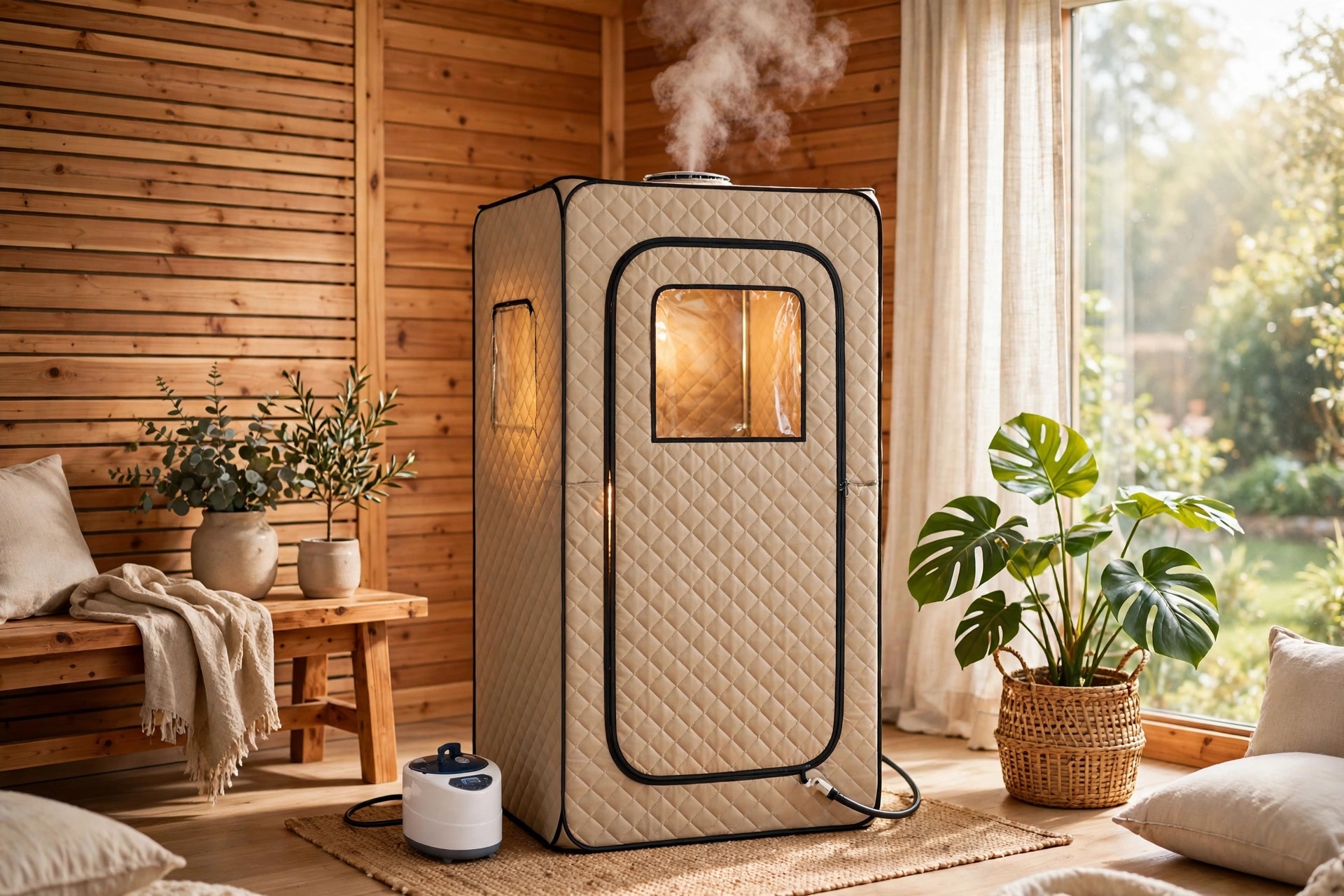
If steam is your format — and for many people it is the most enjoyable heat on this page — the SmartSteam Pro is the complete, sensibly priced way to get it. The kit pairs an insulated tent with a 3.6L steamer, which is a generous tank size in this category, sets up in about ten minutes, and reaches a real 130–140°F at full humidity. That combination — hot, wet, enveloping air — feels much more intense than the number alone suggests, because humid air transfers heat to your skin far more efficiently than dry air at the same temperature. A 140°F steam session is not a consolation prize for people who could not afford “real” heat; it is a distinct experience with a long tradition of its own.

SaunaBox claims 1,890+ reviews at 4.9/5 on its own site — that is the brand's own figure, and we report it as such rather than as an independent verdict. The independent picture from owner reports is of a well-regarded product in a category with one recurring complaint pattern, and it applies here too: steam tents live or die on drying. A tent put away damp will eventually smell of it, and mould complaints in this category almost always trace back to storage. Open it up, let it dry fully after every session, and the product's main known weakness mostly disappears. The 1-year warranty is on the short side, and the red-light version at $399 is an optional extra rather than a necessity — the plain Pro at $299 is the value pick. Full detail in our SmartSteam Pro review and the steam sauna guide.

Check price at SaunaBox Read the full review

Budget infrared starter

Infrared · Head-out tent

SereneLife portable infrared

Format: portable infrared tent, head-out · Price: ~$110–$203 depending on retailer · Track record: 6,000+ Amazon reviews, per the Porch & Fire roundup

Not everyone should start at $1,428, and the SereneLife is the reason the budget end of this page exists. At roughly $110–$203 depending on the retailer and the promotion running that week, it is the default low-cost way to find out whether a head-out infrared routine suits you: sit in the tent, panels warm you directly, fold it away afterwards. Its large owner base — more than 6,000 Amazon reviews, as counted in the Porch & Fire roundup — means its strengths and its limits are unusually well documented for a budget product.

Set expectations at the price. Materials, zips and fittings at this level are built to a cost, published settings vary between retailer listings, and the experience is a genuine but modest version of what the premium infrared tents above deliver. That is an acceptable trade for a first purchase, and a poor one for a forever purchase. Our advice: buy it as a trial with a return window, use it several times a week for a month, and let that experience — not a product page — tell you whether to climb the ladder to a Durasage-class tent (a step up at $329.95, with published panel settings of 104–140°F) or to the Thera360 Plus at the top. The full ladder is in our portable infrared sauna guide.

Check price at SereneLife Compare the infrared ladder

Smallest footprint

Blanket · Surface heat

LifePro RejuvaWrap sauna blanket

Format: infrared sauna blanket · Heat: surface heat inside the wrap — not air temperature · Price: $272.99–$299.99

A sauna blanket is the format for people with no floor space to spare: no tent, no chair, no corner given over to anything. You lay the RejuvaWrap on a bed or sofa, get in, zip up, and lie there in direct, wrap-around warmth while your head stays out in the room. Afterwards it folds or rolls away into storage that a tent cannot match. At $272.99–$299.99, the RejuvaWrap sits in the sensible middle of the blanket market — above the $69.99–$199.99 budget tier, well below the $599–$699 premium names — which is exactly where we would point a first blanket buyer.

Two honest notes belong with every blanket, this one included. First, temperature: blanket figures describe the heat at the surface inside the wrap, where the heating elements sit against you. They are not air temperatures, and a blanket session should be judged on how the direct warmth feels, not compared degree-for-degree with a steam tent or a wood-fired sauna. Second, durability: the known complaint pattern across budget and mid-priced blankets is zipper, controller and seam wear over time, so read the current warranty terms before you buy and keep your receipt. If you are choosing between this and a tent, our sauna vs. sauna blanket comparison walks through the decision, and the sauna blanket guide covers the full price ladder from $69.99 to $699.

Check price at LifePro Read the blanket guide
The number that matters The honest temperature guide

Every portable sauna advert leads with a temperature, and almost none of them explain what the number measures. That is how a $110 tent and a Finnish sauna end up sounding like cousins. They are not — and once you understand the four kinds of heat, you can read any product page in this category and know exactly what is being promised.

Steam: 110–140°F, at 100% humidity. A steam tent boils water in a separate steamer and pipes the vapour into a fabric enclosure. The air inside reaches roughly 110–140°F in practice — the SmartSteam Pro publishes 130–140°F — and it is saturated: every breath is warm and wet, and the moisture condensing on your skin transfers heat quickly. That is why steam feels so intense at temperatures that look modest on paper. It is also why a steam tent will never reach Finnish temperatures, and does not need to: humidity is its whole character.

Infrared: radiant heat, cooler air. Infrared panels do not primarily heat the air; they warm the objects — and the person — in front of them, the way sunlight warms your face on a cold day. Published panel and in-tent ranges vary widely by model: a Durasage publishes panel settings of 104–140°F, a HeatWave Rejuvinator publishes up to 150°F, and the Thera360 Plus publishes 100–170°F. The experience is direct, focused warmth with your head typically outside the tent in ordinary room air. Comparing an infrared figure directly against a steam or wood-fired air temperature is comparing two different measurements of two different things.

Wood-fired: 180–220°F, the real thing. A stove burning actual wood is not limited by a household outlet, and it shows. The SweatTent's 180–220°F range is true convective sauna heat — hot air, a bench, stones you can throw water on — and it is the only portable format that reaches it. If a product page implies Finnish temperatures from a plug-in tent or a blanket, that page is misleading you, whoever wrote it.

Blankets: surface temperature, not air temperature. A sauna blanket's heating elements sit inside a wrap, against your body. The temperatures blankets advertise describe that surface — the heat where the wrap touches you — not the temperature of any volume of air. A blanket can feel intensely warm, and many owners prefer lying down in one to sitting in any tent. But its number belongs to a different column of the table, and honest comparisons keep it there. That is the whole method of this site in one paragraph: same word, four measurements — know which one you are buying.

Go Deeper

Guides for each format

Each format gets its own page, because each format has its own buyers, its own price ladder and its own failure modes. Start with the heat you think you want; read the page that stress-tests that instinct.

A head-out portable infrared sauna tent in a calm room, with a person seated inside and their head outside the tent

Portable infrared saunas

Head-out tents explained and ranked, from the ~$110 SereneLife through Durasage and the HeatWave Rejuvinator to the Thera360 Plus and Relax Sauna at the premium end — with panel settings, prices and the caveats that matter at each step.

Read the infrared guide
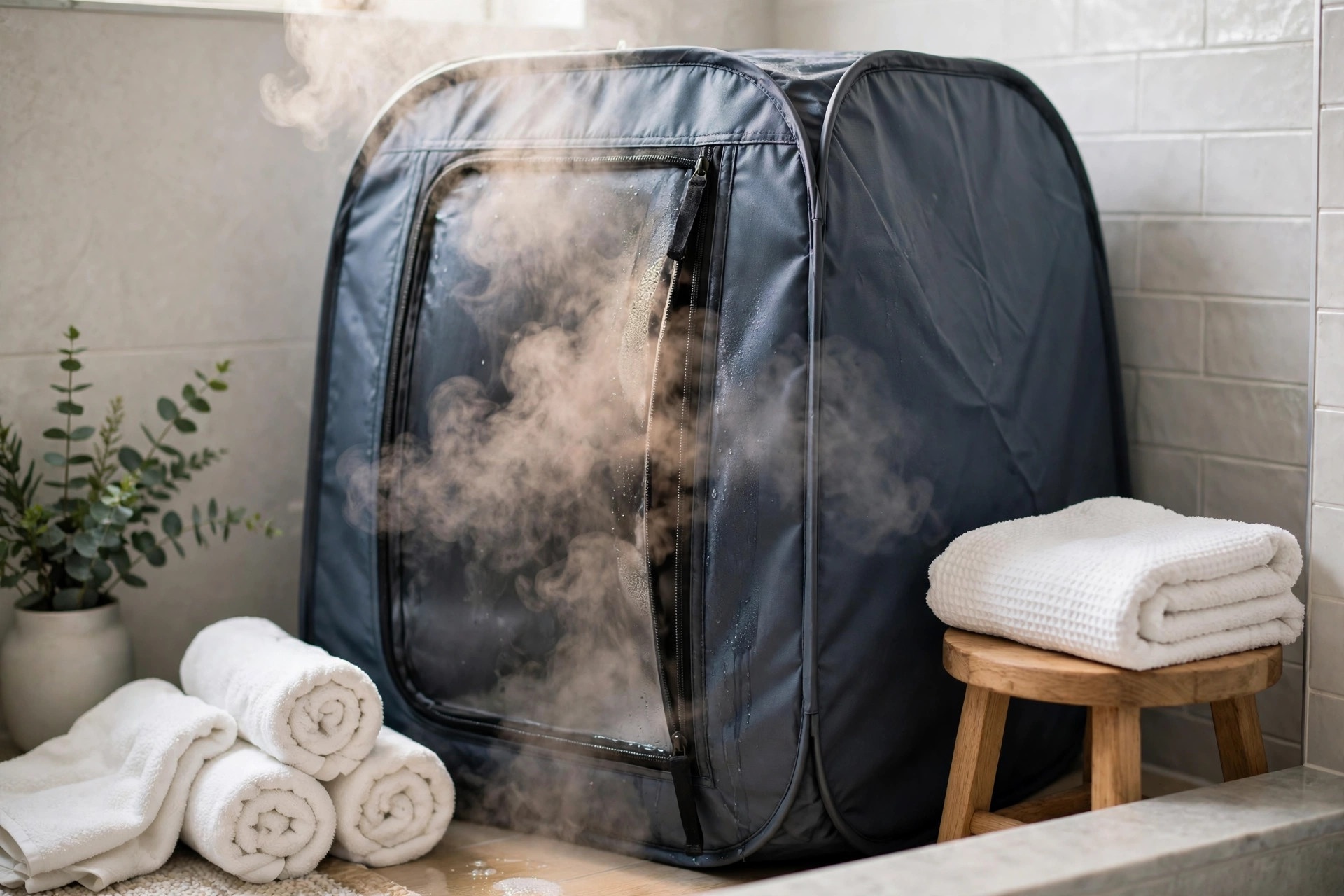
A portable steam sauna tent with gentle visible steam in a spa-like corner of a home

Portable steam saunas

How steam differs — 110–140°F at 100% humidity — why tank size matters, the SmartSteam Pro as the category's reference point, and the drying routine that decides whether a steam tent stays fresh or turns into a mould complaint.

Read the steam guide
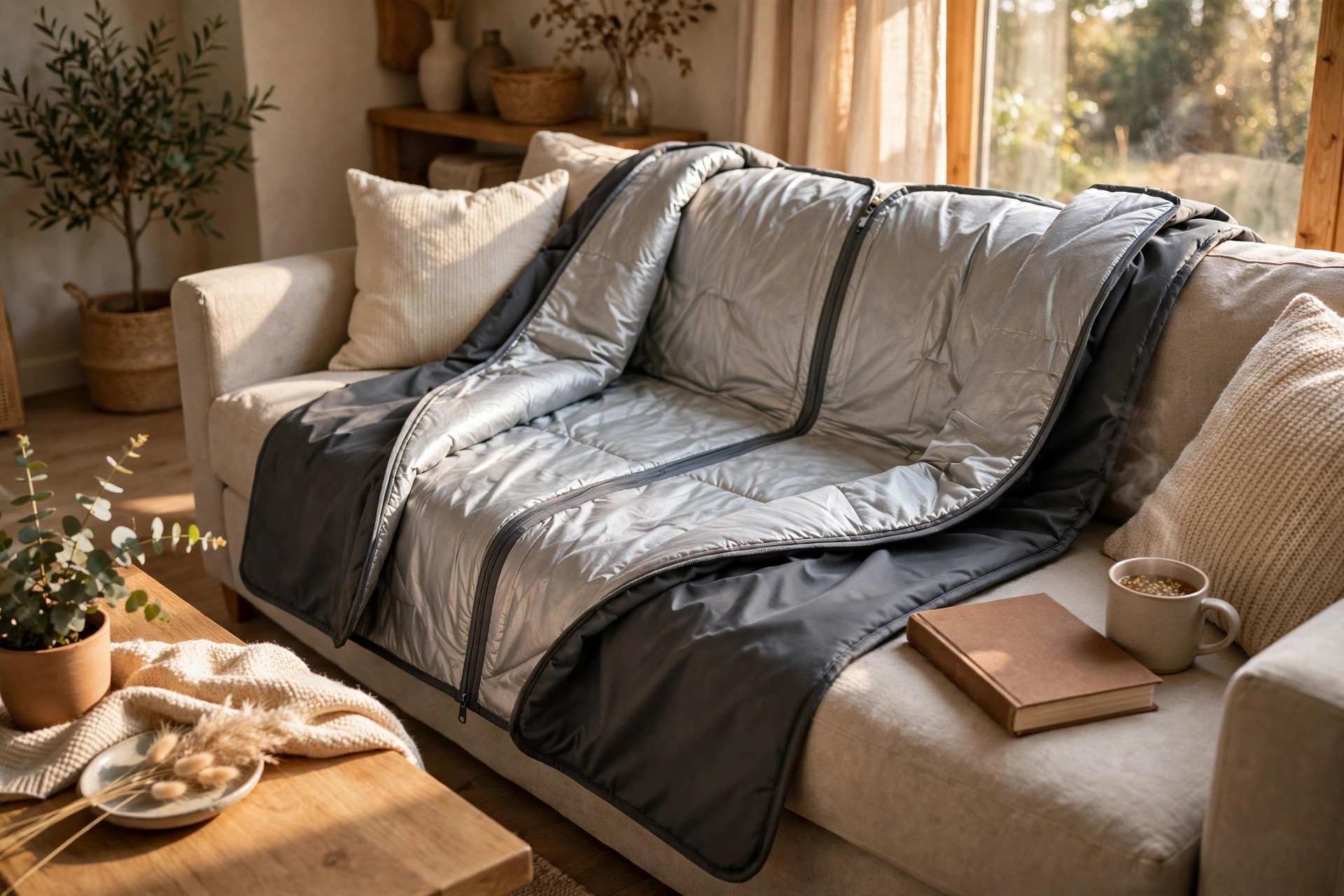
An infrared sauna blanket laid out on a sofa in a cosy living room

Sauna blankets

The full blanket ladder from $69.99 to $699, what surface temperatures really mean, where the RejuvaWrap sits in the range, and the durability questions to ask before buying any blanket, at any price.

Read the blanket guide

Sauna vs. sauna blanket

Tent or blanket? The head-to-head: heat character, footprint, setup, storage, price and who each format actually suits — plus the portable-versus-cabin question for readers arriving from cabin roundups.

Compare the formats

How portable saunas work

The plain-English physics: how steam, infrared panels, a wood stove and a heated wrap each transfer heat, what a session costs in electricity, and the apartment and renter rules that make portables practical.

How they work

Portable sauna FAQ

How hot do they really get? How long should a session be? What do brands actually publish about EMF? Might a purchase be HSA/FSA eligible? Straight answers, with the careful wording those questions deserve.

Read the FAQ

Buying Timing

A note on when to buy

Portable saunas are a winter product. Interest in this category runs roughly three times higher in the cold months than in summer — Amazon's searches for “infrared sauna” ran at about 68,000 in January against about 24,000 in June in the market data we reviewed — and the buying calendar reflects it. The deepest advertised discounts tend to cluster around the late-November sales and the New Year wellness rush, stock on popular models gets thin in December and January, and prices on the same product can move by meaningful amounts between one week and the next. None of that is a reason to rush a $1,400 decision, and none of it guarantees a better price tomorrow than today. It is a reason to do two simple things: compare the price on the brand's own page against the marketplace listing on the day you buy, and take every price on this site — checked in November 2026 — as a well-researched starting point rather than a quote. Prices change; the seller's page wins, every time.

It is also worth deciding your format before the sales decide it for you. A discounted steam tent is not a bargain if you wanted infrared, and a blanket at half price is still the wrong purchase if you wanted to sit up in hot, humid air. Read the temperature guide above, pick the heat, then hunt the price — in that order.

Quick Answers

Three questions everyone asks first

How hot does a portable sauna actually get?

It depends entirely on the format. Steam tents reach about 110–140°F at 100% humidity. Infrared tents warm you radiantly, with published ranges that vary by model — up to 170°F at the premium end. Blankets publish surface temperatures inside the wrap, not air temperatures. And a wood-fired tent reaches 180–220°F, the only portable format at true Finnish sauna heat.

Are portable saunas worth it?

For the right buyer, yes: renters, apartment dwellers and anyone who wants a warmth-and-relaxation routine without installation, plumbing or a permanent fixture. They are worth it when bought for what they are — a comfortable, repeatable ritual — and disappointing when bought on inflated temperature or health promises, which is why this site publishes the real numbers.

How long should a session be?

Start short: 10–15 minutes is a sensible first session for most formats, building only as the heat feels comfortable, with water before and after. Step out whenever you feel dizzy, unwell or simply too hot. If you are pregnant, have a health condition or take medication, ask a doctor before using any sauna — and nothing on this site is medical advice.

All questions, answered in the FAQ

How to read this page: This is a research-based assessment. We do not test units in-house; we work from published specifications, manufacturer documentation, regulatory filings and owner reports, and we say so wherever a number comes from the brand itself. Prices checked November 2026 — they change, and the seller's page wins.